Strengthening the STEM Educator Workforce: Our New Policy Recommendations Paper Is Here

Addressing the STEM Educators Workforce Shortage

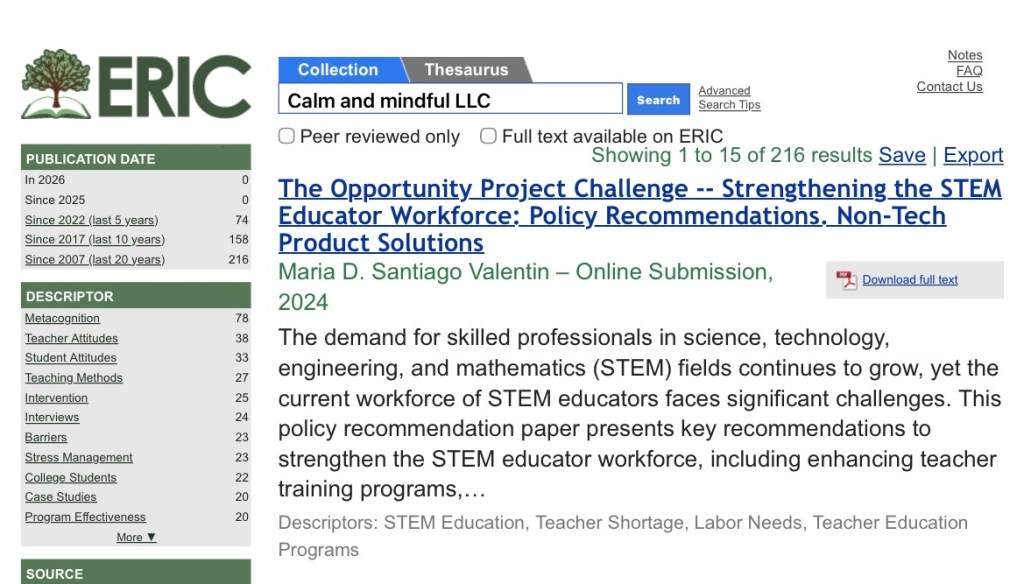
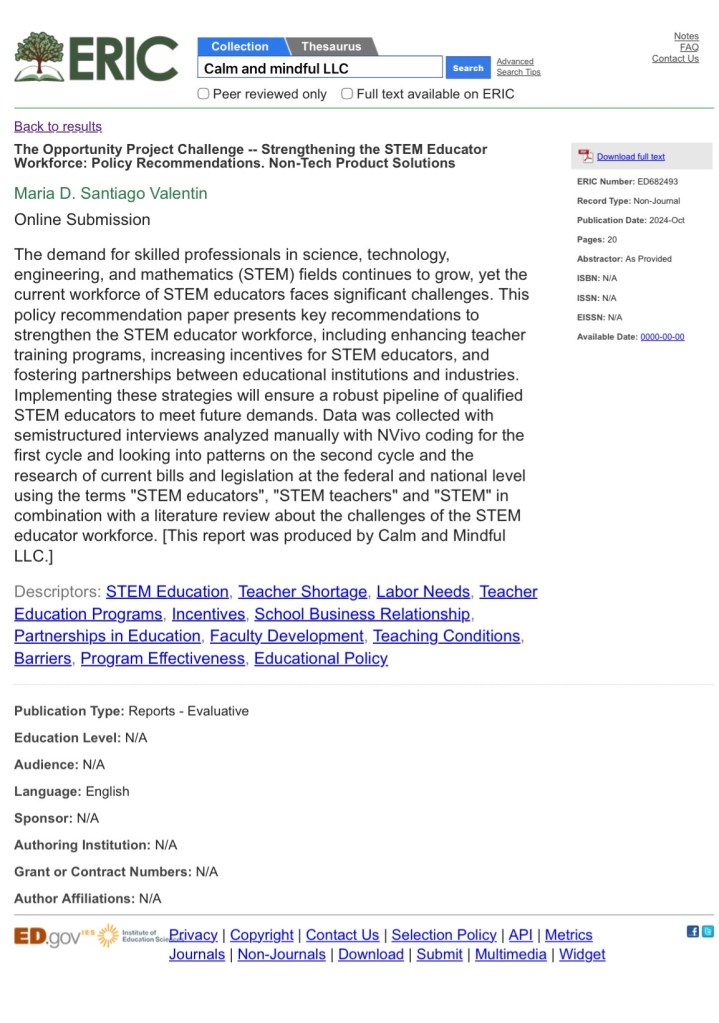
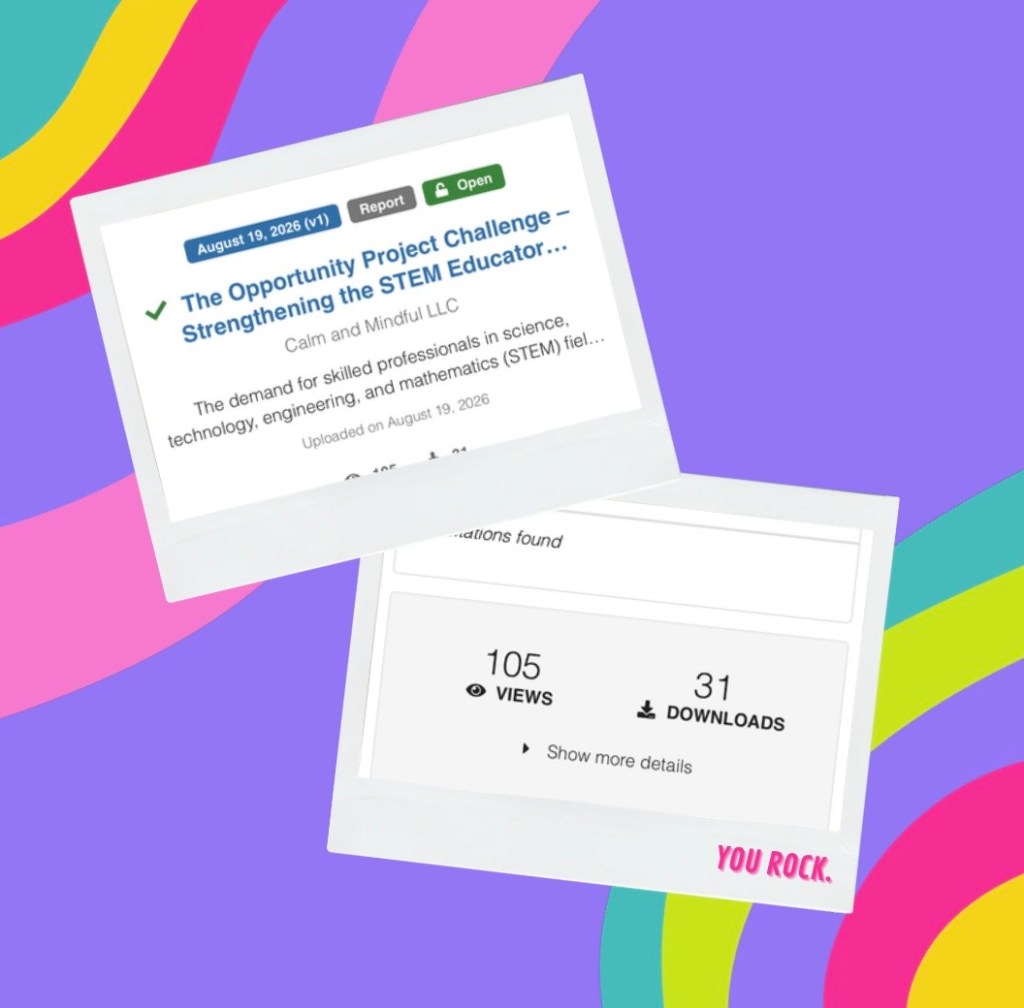
We’re excited to announce the publication of our 2024 research, The Opportunity Project Challenge – Strengthening the STEM Educator Workforce: Policy Recommendations, authored by Dr. Maria D. Santiago Valentin and now publicly available through Zenodo.

📄 Read the full paper: https://doi.org/10.5281/zenodo.22016935

Why This Matters

The United States is facing a STEM educator shortage that shows no signs of slowing down. During the 2017–2018 school year alone, nearly 100,000 STEM teaching positions went unfilled at the high school level, and close to 150,000 went unfilled at the middle school level. These aren’t just numbers on a page — they represent classrooms without qualified instruction in the subjects our students need most to compete in a rapidly changing world.

Part of the problem comes down to money. STEM professionals who choose to teach often take a pay cut of roughly $40,000 compared to what they could earn elsewhere in their field — a gap researchers call the “wage penalty.” When the private sector consistently outbids the classroom, it’s no surprise that talented STEM minds look elsewhere, and that the teachers who do enter the profession often don’t stay long. Many novice STEM teachers leave the classroom before their fifth year.

This shortage doesn’t affect all students equally. It deepens existing inequities, particularly for students in under-resourced schools who are already less likely to have access to qualified STEM instruction — a gap that contributes to the ongoing underrepresentation of minorities and women in STEM careers.

How We Approached the Problem

Rather than relying solely on existing literature, we wanted to understand what STEM educators themselves were experiencing. Our research combined:

  • Semi-structured interviews with STEM educators, analyzed manually using NVivo coding to identify patterns across two analytical cycles
  • A review of current STEM legislation across all 50 states and at the federal level
  • An extensive literature review examining the challenges facing the STEM educator workforce

This mixed approach let us ground our recommendations not just in what researchers have found, but in what teachers are actually living through in classrooms across the country.

Three Areas for Policy Change

The paper organizes its recommendations around three interconnected areas:

1. Enhancing Teacher Training Programs

Effective preparation is one of the strongest predictors of whether a teacher stays in the profession. Our recommendations call for collaboration between universities, state departments of education, and industry to build comprehensive, equitable national STEM standards — including training in social-emotional learning, classroom management, and support for diverse and special-needs populations. We also recommend formalizing mentorship as a required, well-supported position for novice STEM teachers, rather than treating it as an informal extra duty.

2. Increasing Financial Incentives for STEM Educators

Competitive compensation isn’t just about fairness — it’s about supply. The paper recommends higher salaries, student loan forgiveness programs, and portable pension structures that let teachers move between districts and states without losing retirement benefits. We also highlight promising models like endowed chairs for STEM positions in school districts, which can help offset salary and benefits costs at the district level.

3. Supporting Ongoing Professional Development

STEM fields evolve quickly, and teachers need sustained support to keep pace. Recommendations here include funded mentorship curricula, a proposed national STEM certification that would make it easier for teachers to relocate between states, and support for attending professional conferences like those hosted by ISTE (International Society for Technology in Education) and ASCD (Association for Supervision and Curriculum Development).

Part of a Two-Part Solution

This policy paper is one of two solutions Calm and Mindful, LLC developed in response to the national STEM educator shortage. Alongside it, we built a complementary technical solution: an eight-module online training program designed to give novice STEM teachers practical, hands-on support during their earliest — and often most vulnerable — years in the classroom.

Together, the two products pair immediate, teacher-facing support with the kind of systemic policy change needed to make that support sustainable over the long term.

Presented to Federal Decision-Makers

Both solutions were developed as part of The Opportunity Project, a rapid-prototyping model led in collaboration with the U.S. Census Bureau, which brings together organizations to turn public data into usable solutions for national challenges. Our work was presented directly to the U.S. Department of Education and the U.S. Census Bureau — giving these recommendations a direct line to the people positioned to act on them.

Read the Full Paper

We’re grateful to every educator who shared their time and experience to make this research possible. We hope these recommendations serve as a useful, evidence-informed resource for policymakers, district leaders, and anyone working to build a stronger, more sustainable STEM educator workforce.

📄 The full paper is available now at: https://doi.org/10.5281/zenodo.22016935

Citation: Santiago-Valentin, M. & Calm and Mindful LLC. (2026). The Opportunity Project Challenge – Strengthening the STEM Educator Workforce: Policy Recommendations. Zenodo. https://doi.org/10.5281/zenodo.22016935

Screenshot

A look at USGBC’s biggest update in years LEED v5 — from the team at Calm and Mindful LLC

LEED v5: The Quick and Friendly Rundown

So here’s the deal with LEED v5 — USGBC just dropped its biggest update in years, and it’s honestly worth knowing about even if you’re not a builder or architect.

The headline number? Roughly 50% of a project’s certification score is now tied to decarbonization (Association of the Wall and Ceiling Industry, 2025). That’s half the whole scorecard focused on cutting carbon across a building’s entire life — embodied emissions in materials, day-to-day energy use, refrigerants, even transportation (One Click LCA, 2026). Basically, carbon isn’t a bonus category anymore. It’s the main event.

But LEED v5 isn’t just about emissions math. There’s a real focus on human and ecological health too, with about a quarter of the new credits centered on occupant well-being, equity, and healthier, more transparent spaces for the people who actually use these buildings (BuildingGreen, 2025). It’s a nice reminder that buildings are for people first.

Then there’s resilience. Every single LEED v5 project now has to complete a climate resilience assessment, helping teams spot hazards early, understand risk, and protect the ecosystems around them (Facility Executive, 2025). As USGBC’s Sarah Zaleski put it, people want buildings that cut emissions, manage climate risk, stay healthy, and protect the natural world around them all at once (Facility Executive, 2025).

Put it all together and LEED v5 is basically USGBC connecting the dots between carbon, health, and resilience instead of treating them like separate checkboxes. Registration is already open, so this isn’t some future concept — it’s happening now (Construction Owners, n.d.). Pretty exciting stuff, honestly.

References

Association of the Wall and Ceiling Industry. (2025, May 8). USGBC launches LEED v5 with focus on decarbonization and health. https://www.awci.org/about/announcements/usgbc-launches-leed-v5-with-focus-on-decarbonization-and-health/

BuildingGreen. (2025, June 18). LEED v5 is here. https://www.buildinggreen.com/feature/leed-v5-here

Construction Owners. (n.d.). USGBC launches LEED v5 for healthier, resilient buildings. https://www.constructionowners.com/news/usgbc-launches-leed-v5-for-healthier-resilient-buildings

Facility Executive. (2025, May 5). USGBC launches LEED v5. https://facilityexecutive.com/usgbc-launches-leed-v5/

One Click LCA. (2026, March 13). LEED v5 launches with a focus on LCA & embodied carbon. https://oneclicklca.com/en/resources/articles/leed-v5-launches-with-a-focus-on-lca-embodied-carbon

Diagram showing LEED v5 Platinum green building elements including integrative process, location, sustainable sites, water efficiency, energy, materials, and transportation
Key components of LEED v5 Platinum certification for sustainable buildings

Celebrating a decade of Calm and Mindful LLC- women led family owned business.

Calm and Mindful LLC: Partnerships, Progress, and Measurable Impact

Calm and Mindful LLC continues to serve as a model of visionary collaboration, bringing together education, sustainability, wellness, and community empowerment under a unified mission. Through strategic partnerships and evidence-informed initiatives, the organization has strengthened its national and global reach, turning shared values into measurable, real-world outcomes that enhance individual and collective wellbeing.

Advancing Sustainability through Strategic Alignment

In 2025, Calm and Mindful LLC took a significant step forward by being accepted into the New Jersey Department of Environmental Protection (NJDEP) Clean Corridor Coalition (C3), a program that unites organizations working toward clean energy, workforce development, and sustainable infrastructure. The C3 listing (NJDEP, 2025) marked a milestone in the company’s sustainability portfolio, validating its commitment to environmental stewardship and inclusive innovation.

Through this partnership, Calm and Mindful LLC has contributed to regional sustainability initiatives that integrate environmental resilience with economic opportunity. Projects under this collaboration emphasize workforce readiness for the green economy, resilience training for emerging professionals, and educational programs that promote the intersection of wellbeing and ecological mindfulness. These efforts align with the organization’s philosophy that sustainability is not merely an environmental goal—it is a pathway to social equity and holistic health.

Strengthening Education through National Collaboration

Education remains the cornerstone of Calm and Mindful LLC’s mission. Between 2022 and 2025, the organization partnered with the Federal U.S. Department of Education and the Top Opportunity Project to address the growing national demand for qualified STEM educators. This partnership reflects a forward-looking response to systemic needs in teacher preparation and science/technology education equity.

Together, these institutions co-developed a policy-focused white paper and an eight-module online professional learning course for educators. The materials present research-backed strategies for curriculum design, classroom equity, and educator wellness—ensuring that teachers are equipped not only with instructional expertise but also with resilience tools to navigate the complexities of today’s classrooms. This initiative has served as both a learning resource and a policy influence, reinforcing the importance of cross-sector collaboration in shaping the future of education.

Through ongoing collaboration with national and community-based partners, Calm and Mindful LLC has positioned itself as a trusted liaison between educational innovation and practical implementation. The organization’s approach highlights how professional development can drive systemic change when grounded in evidence, inclusivity, and empathy.

Empowering Families and Youth through Community Partnerships

Calm and Mindful LLC further expanded its community-centered mission through a productive partnership with the Latino Institute of New Jersey, founded by Mr. William Colon. This strong alliance reflects the organization’s belief in culturally tailored education and bilingual empowerment.

Together, they facilitated a series of bilingual workshops addressing stress management, school violence prevention, harassment, and bullying. These interactive sessions—designed for parents and guardians—helped bridge communication gaps between schools and families while promoting emotional literacy and positive coping strategies. The workshops provided parents with accessible tools to build safer, compassionate community environments and to support youth development from a place of empathy and empowerment.

The results were both immediate and enduring: increased family engagement in school activities, improved parent-teacher collaboration, and greater awareness of social-emotional wellbeing in educational settings. In this partnership, Calm and Mindful LLC has demonstrated the measurable impact of localized education—showing that lasting change begins with strong, informed, and supported families.

Expanding Global and Local Awareness

Beyond its local initiatives, Calm and Mindful LLC continues to collaborate internationally with organizations that share its commitment to peace, sustainability, and gender equity. Key engagements with Women’s Federation for World Peace International (WFWPI)NGO-CSW/NYClimate Generationthe World Bank, and the Franklin Public Library underscore the organization’s role as both a convener and a contributor to global discourse.

These collaborations provide meaningful platforms for dialogue on climate action, gender equity, and peacebuilding—themes that align with the United Nations Sustainable Development Goals (SDGs). Through workshops, community dialogues, and educational events, Calm and Mindful LLC has fostered an environment where policy discussions translate into citizen action, and global principles are adapted into local contexts. Whether through youth climate education or gender-responsive training, the organization’s impact continues to ripple outward—connecting local communities with global frameworks for justice and sustainability.

A Record of Measurable Action and Shared Vision

The success of Calm and Mindful LLC’s partnerships lies not only in their breadth but also in their depth. Each collaboration is guided by an evidence-based framework that prioritizes measurable outcomes—such as stronger educator retention, improved community wellness, or expanded environmental literacy. Through continuous evaluation and participatory feedback mechanisms, the organization ensures accountability and impact across every initiative.

Ultimately, Calm and Mindful LLC’s story is one of collective progress. By aligning its expertise in education, sustainability, and wellness with the strengths of public agencies, nonprofits, and local communities, the organization has proven that partnership is one of the most powerful strategies for social transformation. Calm and Mindful LLC’s commitment to responsive, mission-driven collaboration continues to set a standard for organizations dedicated to advancing opportunity, inclusion, and meaningful systemic change.


References

  • New Jersey Department of Environmental Protection (2025). Clean Corridor Coalition (C3) Teaming Partners List.https://dep.nj.gov/wp-content/uploads/drivegreen/12.31.2025-c3-teaming-partners-list.xlsx
  • U.S. Department of Education & Top Opportunity Project (2022–2025). STEM Educator Workforce Development Collaboration Materials.
  • Latino Institute of New Jersey, Mr. William Colon (2024). Bilingual Parent Engagement Workshops Reports.
  • Women’s Federation for World Peace International (WFWPI), NGO-CSW/NY, Climate Generation, The World Bank, Franklin Public Library (2023–2025). Collaborative Dialogue and Educational Programming Initiatives.

Our Principal Consultant became LEED GREEN Associate

Becoming a LEED Green Associate is an essential step for professionals dedicated to advancing sustainability and environmental stewardship in building and community design. This credential demonstrates a thorough understanding of green building principles and energy-efficient practices recognized globally.

Earning the LEED Green Associate credential involves studying LEED concepts, passing a comprehensive exam, and committing to continual learning in sustainable solutions.

Congratulations to Dr. Maria Santiago Valentin, principal consultant at Calm and Mindful LLC, for achieving this significant milestone and leading by example in sustainability and wellness.

Screenshot